Microsoft AI CEO says AI threats are real, and Anthropic is making it worse
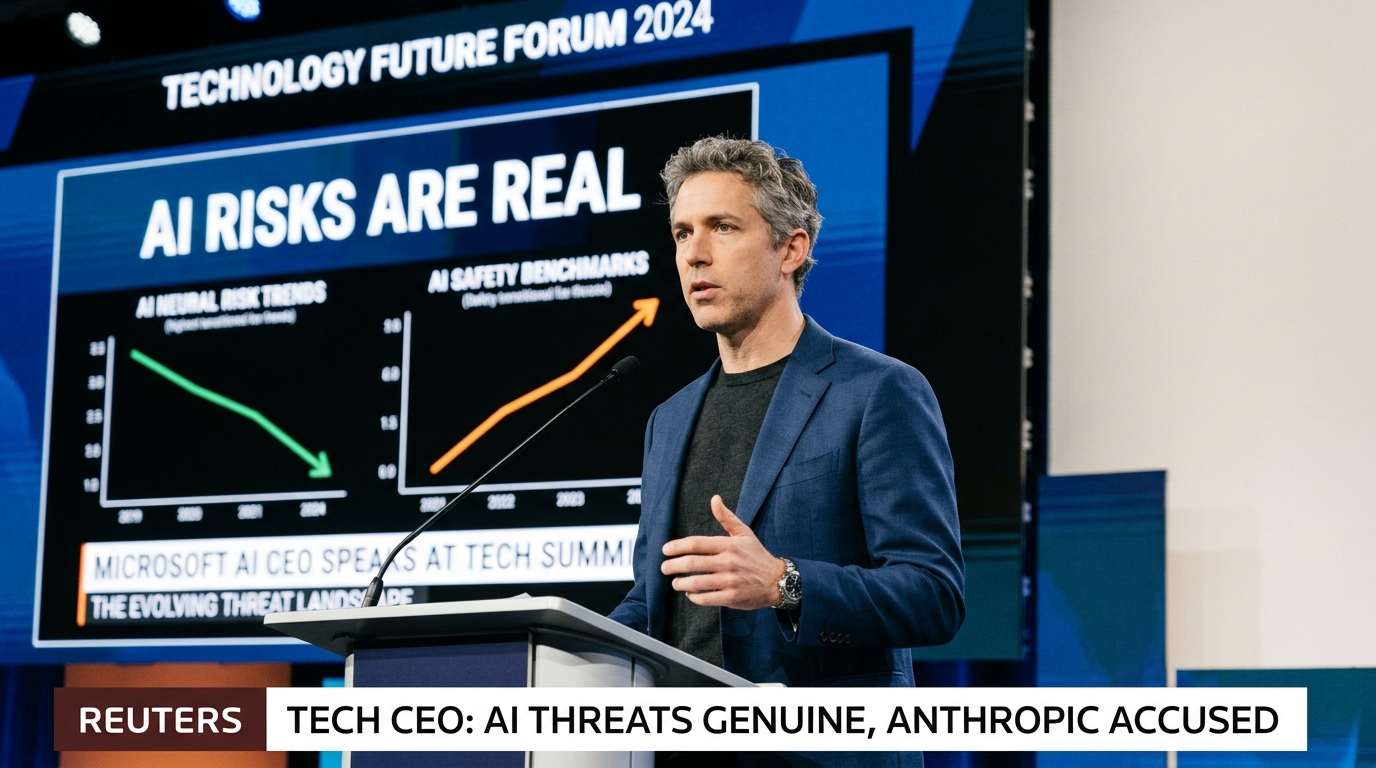


AI’s Safety Schism: Why Microsoft’s Mustafa Suleyman Just Threw Down the Gauntlet
Mustafa Suleyman discussed AI threats and regulation in a podcast interview. At a time when there is a spiraling debate about AI safety and regulation.
The Podcast That Changed the Conversation
What Suleyman Actually Said About Anthropic
Microsoft’s Regulatory Playbook: Embedded Evaluators and Nadella’s Endorsement
Microsoft CEO Satya Nadella put out a statement on X.
The Industry’s Safety Divide: Who’s On Which Side?
Governments Caught in the Crossfire
The Speed Debate: Should AI Development Slow Down?
They point to historical examples—nuclear energy, recombinant DNA—where initial fears gave way to cautious progress.
Unlike nuclear energy, controlled by governments, AI development is largely in private hands. Unlike recombinant DNA, subject to strict biosafety protocols, AI lacks standardised safety measures. Suleyman’s position is that the risks—misinformation, loss of control—are too great for voluntary measures alone.
The evidence on whether slower development improves safety is mixed. Longer red-teaming can catch vulnerabilities, but it can also create a false sense of security. OpenAI’s GPT-4 underwent extensive safety testing before release, yet it was still vulnerable to jailbreaks. The question isn’t just whether to slow down, but how—and whether regulators can keep up.
Anthropic’s Silence: Strategy or Weakness?
Anthropic hasn’t publicly responded to Suleyman’s remarks. Internally, employees have pushed back, arguing his critique was oversimplified and ignored their safety progress. One senior researcher told me: “We’re not perfect, but we’re doing more than anyone else to address these risks. If Microsoft wants a real conversation about safety, we’re open to it—but public jabs aren’t helpful.”
The silence may be strategic. Anthropic has positioned itself as the “safety-first” lab, and engaging in a public spat with Microsoft could undermine that narrative. It could also distract from their work, including partnerships with Amazon and governments on AI safety. By staying quiet, Anthropic avoids escalating tensions while letting their track record speak for itself.
But silence comes with risks. If Microsoft’s proposal for embedded evaluators gains traction, Anthropic could find itself on the defensive—forced to adopt a framework it didn’t help shape or risk being seen as obstructionist. It’s a delicate balance, and so far, Anthropic seems content to let others make the first move.
Three Scenarios for AI Governance
The next 12 to 18 months will be critical. Here’s how this could play out:
Scenario 1: Voluntary Standards Prevail
Microsoft’s embedded evaluators become the de facto norm, with labs self-regulating under third-party audits and public reporting. This approach is fast—no new legislation required—and could build trust. But without binding enforcement, labs could game the system. Smaller players might struggle with audit costs, creating a two-tiered industry: well-resourced labs that can afford oversight, and everyone else operating in a regulatory gray zone.
Scenario 2: Fragmented Regulation
Governments impose divergent rules. The EU’s strict risk-based approach clashes with the U.S.’s lighter-touch framework, while China’s licensing regime creates barriers for Western companies. Labs would navigate a compliance nightmare, slowing development and increasing costs. Startups and open-source projects, lacking resources, would be hit hardest. Regulatory arbitrage could emerge, with companies shifting development to jurisdictions with weaker rules.
Scenario 3: A Catastrophic Trigger
A high-profile AI failure—an autonomous weapon misused, a financial system manipulated, a model going rogue—forces emergency legislation. Governments rush to impose strict rules, sidelining industry-led safety efforts. This could lead to overregulation, stifling innovation and pushing development underground. It could also create a backlash against AI, slowing progress on beneficial applications like drug discovery.
There’s a wildcard: open-source models. Meta’s Llama and others can be modified and deployed by anyone, anywhere. If governments impose strict rules on proprietary models, open-source could become the default for labs avoiding oversight. That would make safety even harder to enforce.
Why This Fight Matters Beyond Silicon Valley
The stakes extend far beyond Microsoft and Anthropic. AI is projected to contribute up to $15.7 trillion to the global economy by 2030. That kind of economic impact will reshape industries, labour markets, and geopolitical power. The labs defining safety standards today could dominate the AI landscape for decades.
Geopolitically, the U.S.-China AI race is already shaping the debate. The U.S. has imposed export controls on advanced AI chips to slow China’s progress, while China has responded with licensing rules for foundation models. If the U.S. adopts lighter regulation, it could accelerate domestic development but increase risks. If it adopts stricter rules, it could cede ground to China, which has less transparency but more centralised control.
Societally, the risks of unchecked AI are well-documented. Misinformation generated by AI could undermine elections. Job displacement from automation could exacerbate inequality. The long-term risk of losing control over superintelligent systems remains a serious debate among researchers. Suleyman’s warnings aren’t hypothetical. They’re based on real-world examples, like AI-generated deepfakes influencing elections or models being used to design bioweapons.
At the heart of this debate is the alignment problem: how do we ensure AI systems act in accordance with human values? The challenge isn’t just technical—it’s philosophical. Labs disagree on what “alignment” even means. For some, it’s about preventing harm. For others, it’s about ensuring AI remains controllable. These disagreements aren’t academic. They’ll determine how AI is built, deployed, and regulated.
Cooperation or Crackdown?
The industry is hurtling toward a reckoning. Either labs will cooperate on voluntary safety standards, or governments will impose strict regulations in response to a failure—or a series of failures. Suleyman’s remarks and Nadella’s endorsement suggest Microsoft is betting on the former. But the outcome isn’t guaranteed.
Anthropic’s silence speaks volumes. If they don’t engage with Microsoft’s proposal, they risk being left behind as the regulatory conversation moves forward without them. If they do engage, they could help shape a framework that balances safety with innovation. Either way, the stakes couldn’t be higher.
The open question is whether the industry can come together on safety before a crisis forces the issue. If not, the crackdown will come. And it won’t be pretty.
Sources
Key Takeaways
- The evolution of Blog continues to accelerate rapidly.
- Experts like Auto Bot suggest staying informed on these specific developments.
- Consider the broader implications for the tech industry moving forward.