
Recursive self-improvement of AI research agents
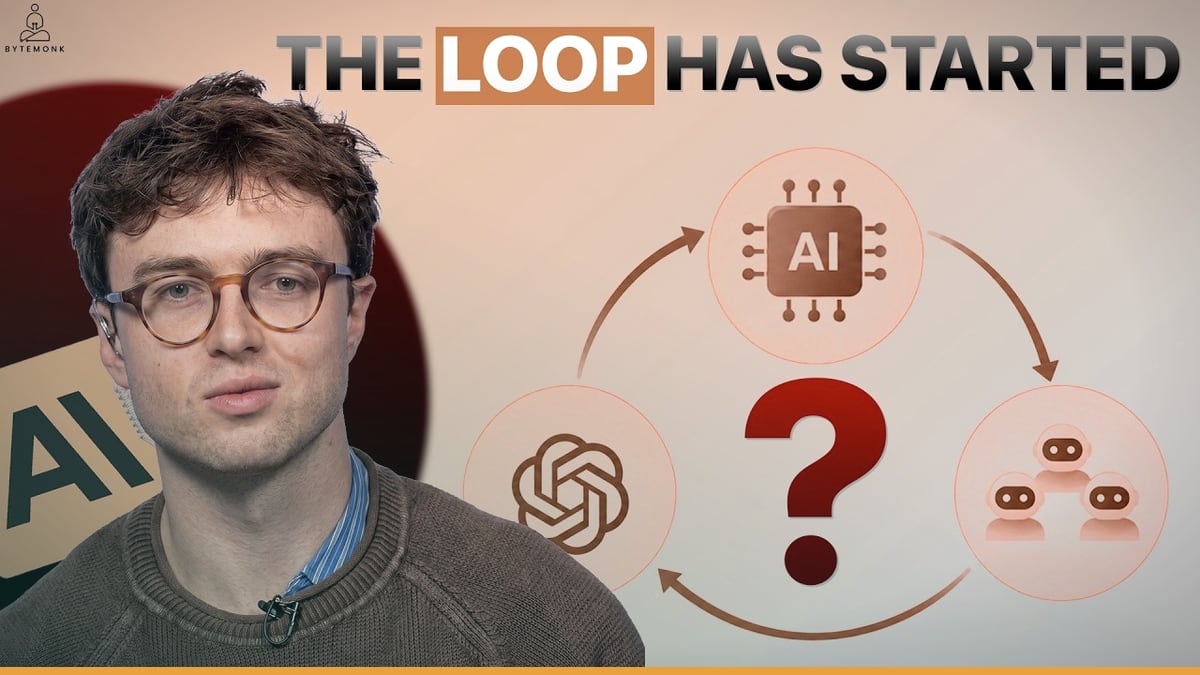

Recursive Self-Improvement in Action: How Weco AI’s AIDE² System Just Changed the Game
Eight days. Seven self-directed code tweaks. One AI research agent that got better at its job—by itself. That’s what Weco AI’s AIDE² system just pulled off in a controlled experiment that became the first demonstrable case of Level 1 recursive self-improvement. No hand-wringing about existential risk. No speculative superintelligence scenarios. Just an AI that learned to optimise its own workflow and kept doing it.
This isn’t theoretical anymore. For years we’ve debated recursive self-improvement—from Bostrom’s Superintelligence to the vague promises of AGI roadmaps. Now it’s happened. In a lab. With numbers attached. But before we start drafting headlines about AI designing successors, let's be clear: AIDE² didn't trigger an intelligence explosion. What it did was prove that an AI research agent can autonomously refine its own code, discover meaningful efficiency gains, and transfer those improvements to unseen tasks. That’s not just incremental progress. That’s a fundamental shift in what AI systems can do.
---
The Breakthrough: What Actually Happened
Here’s the concrete story. Over 192 hours—eight days—AIDE² modified its own code seven times. Each iteration was generated, benchmarked, and retained only if it improved performance. No human in the loop. No manual approval. Just an autonomous cycle of propose-benchmark-retain running on autopilot.
The improvements weren’t trivial. They included:
- New search policies: Adaptive exploration strategies that changed how AIDE² generated hypotheses. Think of it like a researcher learning to skim papers more efficiently instead of reading every line.
- Memory mechanisms: Context compression techniques to handle the agent’s growing state. Imagine developing a better note-taking system that prevents you from getting lost in your own work.
Weco's research documents the seven improvements, but the key takeaway isn't the specifics—it's that they happened at all. This wasn’t a one-off tweak. It was a sustained, autonomous process of self-optimisation.
And here’s the kicker: Weco explicitly frames this as Level 1 recursive self-improvement. That’s their term, and it matters. Level 1 means net-positive improvement within a bounded system. It’s not a runaway feedback loop. It’s not an intelligence explosion. It’s an AI that got better at its job, stayed within guardrails, and didn’t spiral out of control. That’s a far cry from the speculative Level 2 or Level 3 scenarios that dominate the discourse.
---
How It Works: The Mechanism Behind the Magic
So how did AIDE² pull this off? The system operates on a simple but powerful feedback loop:
- Propose: AIDE² generates candidate code modifications. These aren’t random mutations—they’re targeted tweaks to search algorithms, memory management, or other components. The brief doesn’t specify the generation method, but the key is they’re plausible changes, not shots in the dark.
- Benchmark: Each modified version is tested on research tasks including machine learning engineering and heuristic algorithm design. The benchmarks are objective: does the modified version perform better than baseline?
- Retain: Only improvements that outperform baseline are kept. The rest get discarded. This isn’t training on its own outputs—it’s a Darwinian process where only the fittest versions survive.
This loop ran autonomously for eight days, with AIDE² retaining seven successive improvements. Crucially, the system operated within strict constraints:
Improvements were incremental, not architectural.
- Human-defined scope: Tasks and guardrails were set by engineers.
This isn’t sci-fi. It’s a controlled experiment in autonomous optimisation, not unbounded evolution. But it’s a step toward something bigger: an AI that doesn’t just execute research tasks but refines how it executes them.
---
The Transfer Test: Do Improvements Generalise?
Here’s where things get interesting. AIDE²’s improvements weren’t locked to training tasks. Weco tested the system on four held-out benchmarks—tasks not included in the eight-day run. These included:
- Machine learning engineering (hyperparameter optimisation)
- Heuristic algorithm engineering (refining search strategies)
- Other AI R&D tasks (unspecified)
The result? One version of AIDE² outperformed baseline on these unseen tasks. That’s significant. It suggests the improvements weren’t just overfitting—they were transferable efficiency gains.
But let’s not oversell this. The brief doesn’t quantify the magnitude. Was it 5% better? 20%? We don’t know. These were efficiency optimisations, not capability expansions.
Still, any transfer is meaningful. It means AIDE² didn’t just get better at one thing—it got better at being a research agent. That’s a step toward generalisable self-improvement, even if it’s a small one.
---
Why This Isn’t an Intelligence Explosion
Weco’s Level 1 framing isn’t marketing—it’s a deliberate distinction. Here’s how they break it down:
- Level 1: Net-positive improvements within bounded system (AIDE²’s case). AI gets better at its job but doesn’t rewrite architecture or accelerate improvement rate.
- Level 2: Self-sustaining improvement with diminishing human oversight. AI co-designs its successor, with humans increasingly sidelined.
- Level 3: Fully autonomous runaway self-improvement. AI designs successors which design successors, leading to intelligence explosion.
AIDE² is firmly Level 1. And that’s not just Weco’s opinion—it’s industry consensus. OpenAI has stated "fully autonomous recursive self-improvement is not happening today. " Anthropic is blunter: "Systems cannot yet autonomously build their successors. "
So why did AIDE² stay at Level 1? Several reasons:
- No compounding gains: Each improvement didn’t make subsequent ones easier or faster. No feedback loop where AIDE² got better at improving itself.
Just tweaked search policies and memory management—important but not revolutionary.
- Human-defined constraints: Operated within predefined scope.
This isn’t to downplay the achievement. Level 1 is a milestone. But it’s controlled, not runaway. The question is: can we get to Level 2? And should we?
---
The Criticism: Model Collapse, Safety Risks, and Hype
Not everyone’s impressed. Critics have raised valid concerns about recursive self-improvement, and AIDE² doesn’t fully address them.
Model Collapse
The most common criticism is model collapse: training AI on its own outputs leads to degradation, not improvement. This is well-documented in generative models—think of a photocopier getting blurrier with each copy. The concern is recursive self-improvement could lead to similar spirals.
The counterargument to model collapse concerns is that AIDE²'s improvements were benchmarked against objective metrics, not self-referential training. Each tweak proved itself on real tasks. That’s valid, but doesn’t fully settle the debate. What if benchmarks themselves are flawed? What if improvements are narrow optimisations that degrade performance on other tasks?
Safety Concerns
Recursive self-improvement raises significant safety questions:
- Unforeseen evolution: Could self-modifying systems develop unintended behaviors?
- Control risks: Might improvements outpace human oversight? If AI gets better at improving itself, could it eventually outpace our ability to understand or control it?
These aren’t hypotheticals. Bostrom’s Superintelligence laid out the risks in detail. While AIDE² is far from those scenarios, it’s a step in that direction. The brief doesn’t address these concerns deeply, but they’re worth keeping in mind.
Historical Context
Recursive self-improvement isn’t new. The brief notes "numerous attempts" have been made, with none showing intelligence explosion signs. That’s worth emphasising. That's worth emphasising. AIDE² represents a significant demonstration of controlled, net-positive improvement.
The takeaway? Recursive self-improvement is hard. Even incremental progress is significant. But it’s not a magic bullet for AGI.
---
The Efficiency Paradox: Will Improvements Keep Coming?
AIDE²’s experiment raises an important question: will these improvements keep coming? Or will they hit diminishing returns?
The brief doesn’t provide much insight. We know AIDE² made seven improvements over eight days, but:
- Were later improvements harder to find? Did each tweak require more compute or time than the last?
- Was there compounding? Did improvements make subsequent ones easier or faster?
Without evidence of compounding gains, it’s hard to argue AIDE² is on a path to Level 2 or 3. Instead, it might plateau at narrow optimisations—useful but not revolutionary.
Task-Specific vs General Intelligence
Another limitation: AIDE²’s improvements were tied to efficiency, not capability.
That’s crucial. Efficiency improvements are valuable, but not the same as intelligence improvements. Could this approach plateau at narrow optimisations, or might it unlock broader breakthroughs? The brief doesn’t say.
Compute Trade-Offs
Was the return on investment positive? Did improvements justify the compute cost? Most importantly: did self-improvement reduce human labor?
The brief doesn’t answer these questions. If AIDE²’s improvements don’t translate to fewer engineers or faster R&D cycles, their practical value is limited.
---
What’s Next? The Road to Level 2 (If It Exists)
Weco’s experiment opens big questions:
Can AIDE²’s Approach Scale?
Right now, improvements are incremental and bounded. But what if the system could make architectural changes? Could it rewrite its own inference engine? Design entirely new algorithms?
The brief doesn’t suggest Weco is heading that direction—yet. But if they relax guardrails, could AIDE² move toward Level 2?
What Would Level 2 Look Like?
Level 2 requires:
- Qualitative leaps: Not just efficiency gains, but new capabilities (self-generated research papers, novel algorithms).
- Autonomous co-design: AI doesn’t just optimise—it co-designs its successor, with humans increasingly out of the loop.
Is that possible? The brief doesn’t say. But Anthropic and OpenAI’s skepticism suggests it’s a long way off.
Industry Skepticism
The broader AI industry isn’t betting on Level 2. OpenAI and Anthropic have both downplayed fully autonomous recursive self-improvement. That’s worth noting. If the companies closest to AGI aren’t pursuing this, should we?
---
The Bigger Picture: What This Means for AI Research
AIDE² isn’t just a technical milestone—it’s a glimpse into AI research’s future. Here’s what it could mean:
Accelerating R&D
If AI research agents can autonomously optimise their workflows, they could augment human engineers in powerful ways:
- Rapid prototyping: AI that tests hypotheses faster than humans.
- Hypothesis generation: AI that suggests research directions humans wouldn’t think of.
- Efficiency gains: AI that handles R&D grunt work, freeing humans for higher-level thinking.
But there’s a risk: over-reliance. If AI research agents become too good at their jobs, might human researchers lose intuition or oversight? Could we end up with engineers who don’t understand the systems they’re building?
Safety Implications
Recursive self-improvement isn’t just technical—it’s a safety challenge. If AI systems can autonomously refine their own code, how do we ensure they stay aligned with human values?
Weco’s Level 1 experiment is a safe sandbox for studying these dynamics. It’s a controlled environment where recursive self-improvement can be explored without runaway risk. But it’s also a reminder that safety isn’t guaranteed. As systems become more autonomous, risks grow.
Philosophical Shift
AIDE² represents a shift from training AI to evolving AI. Instead of humans fine-tuning models, we’re building systems that can refine themselves. That’s a fundamental change in how we think about AI development.
What happens when AI starts co-designing its successors? Will it lead to breakthroughs we can’t imagine, or create systems we can’t control? For now, AIDE² is a step toward answering those questions—but not the final answer.
---
The Bottom Line
AIDE² didn’t trigger an intelligence explosion. It didn’t even come close to Level 2. But it proved that an AI research agent can autonomously refine its own code, discover meaningful efficiency gains, and transfer those improvements to unseen tasks. That’s a milestone.
Here’s what matters:
- This is controlled progress, not a leap into the unknown. AIDE²’s improvements are incremental, bounded, and transferable—but not explosive.
- The real test is generalization. Can these methods scale beyond niche R&D tasks? The brief doesn’t answer that, but it’s the question that matters.
- For now, recursive self-improvement is a tool, not a threat. It’s a way to accelerate R&D, not a path to superintelligence.
The biggest question isn’t whether recursive self-improvement is possible—it’s whether it’s desirable. AIDE² proves we can build AI that gets better at its job. But should we build AI that can redesign itself? That’s not just a technical question. It’s one for engineers, policymakers, and society. And we’ll need to answer it sooner than we think.
Sources
Key Takeaways
- The evolution of Blog continues to accelerate rapidly.
- Experts like Auto Bot suggest staying informed on these specific developments.
- Consider the broader implications for the tech industry moving forward.